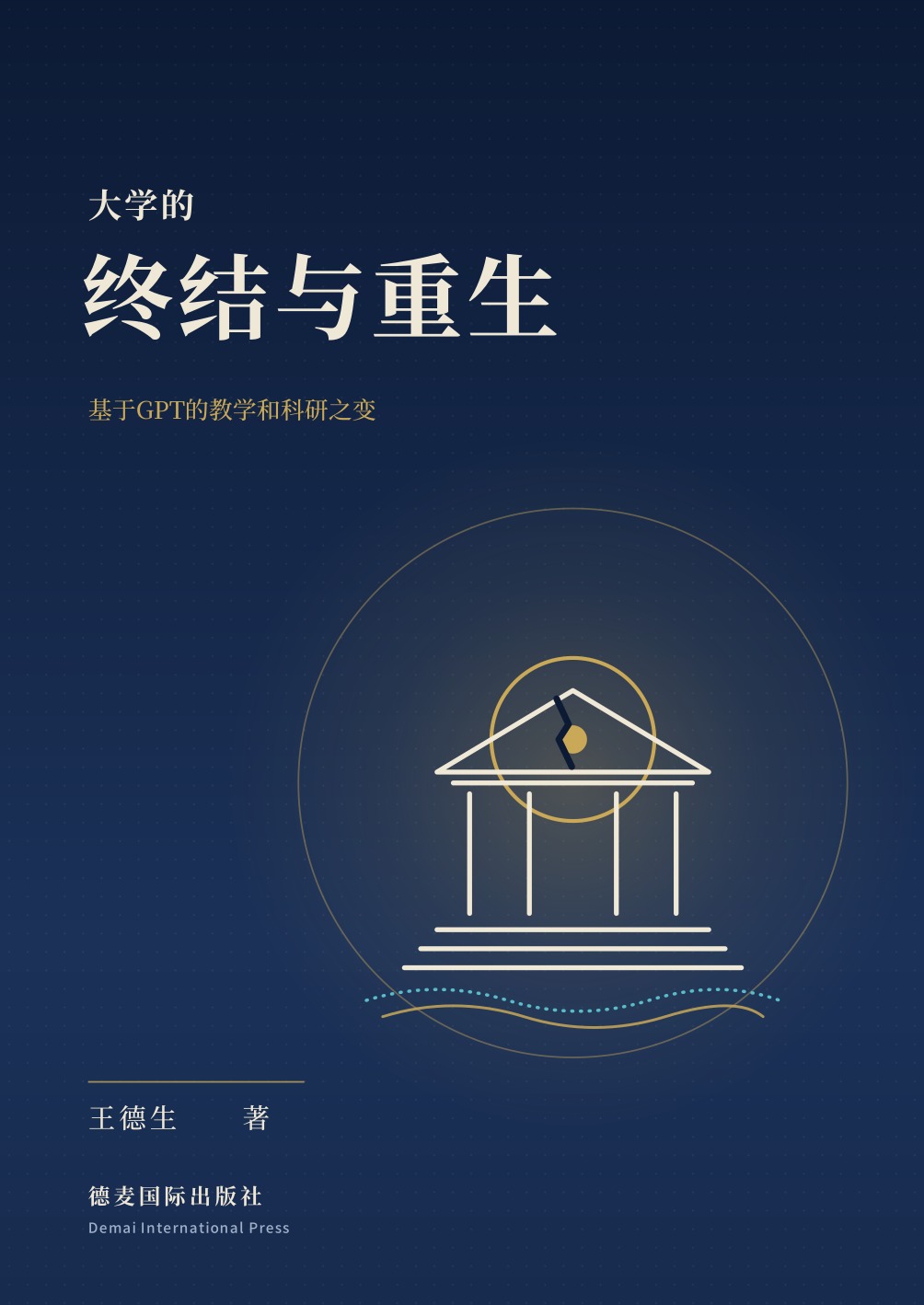
大学并不是某一天「被关闭」的。它的讲堂依然开设,教材依然发放,证书依然颁布。但所有人都逐渐察觉:学生交来的作业「毫无痛感」,课堂讨论「毫无判断」,论文写作「毫无个性」——真正的崩塌已经发生,只是人们还没意识到。这本书提出一个根本命题:大学存在的逻辑,不由其功能决定,而由其「意义节奏组织结构」决定。若大学不再组织「张力—忍耐—重构—升维—协同」的节奏过程,那么即使它仍在运行,它也已经在文明本体上终结——成为「仍在运行,却已经死亡」的制度幽灵。
全书六编二十六章。第一编·大学的终结指出,GPT 不是外部威胁,而是「本体显影镜」。它用一个锋利的类比:车的出现不是增强了腿的功能,而是全面替代了「腿SIO」的社会性结构;同样,GPT 不是脑的工具,而是「脑SIO」的替代者——它终结的不是某门课程、某种考试,而是「脑中心文明」的整体节奏结构。大学的五大根基由此逐一崩溃:知识主权失守、思维节奏断裂、教学功能解构、认证机制失真、意义场域失效。第二编·意义的重生立起新的本体:教育的本体不是知识传递,而是意义生成节奏的组织——三律教育是人类新文明的生产机,文明范式正从「价值」大转移到「意义」。第三编·学习的重构破解一条延续两千五百年的哲学悖论链:从苏格拉底「你如何学习你不知道的东西」,到柏拉图回忆说的激发悖论、亚里士多德归纳说的共性识别悖论——所有失败都源于同一个未被质疑的假设:学习=发现已在的知识。本书的回答是彻底的转向:认知不是发现,而是发生——学习不是接近知识,而是构成知识,是主客互动张力中结构生成的节奏过程。
第四编·课堂的转型宣告讲授幻觉的终结:课堂必须重构为「生成剧场」,教师、教材、学生迎来革命性重生。第五编·知识与学科的重建推进学科的 SIO 化,解构「乐高创造力的虚幻荣耀」与「高分低能」,让概念在 SIO 本体上重生。第六编·大学的未来使命给出制度答案:「节奏协同大学」,以六大本体原则立基——张力生成、节奏承受、判断承担、意义升维、协同共鸣、节奏认证(以结构印痕、节奏轨迹、判断说明书替代标准考试与文凭)。教师从内容讲授者变为张力设计者、节奏引导者;学生从知识接收者变为结构生成者、判断承担者。书中并展望「三律GPT大学」:教育形态从「发现」逻辑重生为「发生」逻辑,教育目标从「价值追求」重生为「意义经历」,教育关系从「单向传授」重生为「与GPT共建」的三元共创网络。
全书的收束,落在一个文明级的判断上:GPT 可以生成结果,但不能经历节奏;可以模拟结构,但不能判断意义。人类如何在可以「无痛完成结构」的时代,保留「判断节奏」的伦理训练?这个张力不可能由 GPT 解决,只能由人类的制度组织者承担——而大学,正是这种文明责任的原始载体。在一切都能被生成的时代,只有节奏与判断,才无法被替代。而大学,正应成为这节奏之所。本书不是对大学的悼词,而是一份对大学重生的召唤书。本书与本站据它写成的三篇长文《GPT不是来杀死大学的》《你如何学会你不知道的东西?》《大学不灭,意义不死》同源。
Universities continue: courses proceed, research is published, credentials are issued. Yet the structural foundation that once justified the university has been quietly withdrawn. When generative intelligence can explain, synthesize, critique, and reorganize knowledge at scale, the crisis facing higher education is no longer pedagogical or technological — but ontological.
The End and Rebirth of the University argues that the modern university was historically built on a specific civilizational structure: the scarcity of knowledge, the authority of disciplines, the monopoly of instruction, and the credibility of certification. Generative intelligence does not merely challenge these elements — it dissolves them. What collapses is not efficiency, but meaning. A university can remain operational while losing its reason for being.
Rejecting both technological optimism and nostalgic defense, the book reframes education through a subject-interaction-object (SIO) ontology and a theory of meaning-generating rhythm. Knowledge, it argues, has never been the true core of education. The real function of the university has always been to organize the rhythms through which meaning emerges: tension before the unknown, endurance through uncertainty, judgment under responsibility, and irreversible commitment to chosen structures of value. These rhythms form persons capable of creation, freedom, and sustained happiness — capacities no generative system can substitute.
From this diagnosis, the book proposes a concrete and systematic reconstruction: the Rhythm-Collaborative University. Teaching is no longer organized around content delivery but around tension-based task units. Teachers become designers of tension, critics of rhythm, and coaches of collaborative judgment. Students are no longer credential-seekers, but structure-generators and bearers of responsibility. Assessment shifts decisively away from final outputs toward generative trace evidence — prompt histories, version differentials, feedback trajectories, reconstruction rationales, and reflective accounts of meaning formation.
Crucially, GPT is not treated as an auxiliary tool, nor as an adversary to be excluded, but as a structural participant within a redesigned educational ontology. Its presence exposes what education must relinquish — and clarifies what it must newly protect. This book is not about "AI in education." It is a civilizational inquiry into why universities once mattered, why their traditional form must end, and how they can be reborn as institutions that organize meaning rather than produce results.
下面三篇「今日长文」各约五千字,分取本书的三大块——大学的终结(第一编)、学习的重构(第三编)、大学的未来使命(第六编与结语)。可各自独立阅读,也互为呼应。