管理学问「企业如何运转得更好」,然后去优化流程、配置资源、激励人。企业本体论问一个更靠前的问题:企业到底是什么样一种存在,以至于它必须持续做某件事才不至于散掉?答案不在资产负债表上。一家公司真正在生产的,从来不只是产品与利润,而是一种让内部所有人愿意继续朝同一个方向使劲的「意义」——这个意义一旦停止被重新发生,再厚的家底也拦不住它涣散。本专栏用发生学,一层层把这件事拆开。Management asks how a firm runs better, then optimises process, allocates resources, motivates people. Enterprise ontology asks the prior question: what kind of being is a firm, such that it must keep doing something or fall apart? The answer is not on the balance sheet. What a company truly produces is never just products and profit, but a meaning that keeps everyone inside pushing the same way — and once that meaning stops being re-generated, no amount of accumulated assets will hold it together.
一家企业真正的产品,是让内部所有人「愿意朝同一个方向使劲」的那个意义。组织不靠结构维系,靠意义的持续再发生维系;管理的全部难处,不是把事情安排对,而是让意义在每一次交接、每一次增长、每一次危机中,不被稀释地重新发生一遍。企业不是死于对手,是死于它自己的意义停止了再发生。
A firm's true product is the meaning that makes everyone inside willing to push the same way. An organisation is held together not by structure but by the continual re-generation of meaning; the whole difficulty of management is not arranging things correctly but letting meaning re-occur, undiluted, through every handover, every round of growth, every crisis. A firm dies not from its rivals but from the moment its own meaning stops re-generating.
— 专 著 · 本专栏背后的学术底稿 —
— MONOGRAPH · THE BOOK BEHIND THIS COLUMN —
先立一个总判断:企业是什么。以下这篇是整个专栏的地基。
First, the founding claim: what a firm is. The piece below is the bedrock of the whole series.
理论之外,看看业界最成熟的「企业结构建模」实践长什么样——以及它照不到的那一维。
Beyond theory: the most mature real-world practice of modelling a firm's structure — and the dimension it cannot see.
承上:产业观察讲清了 Palantir 「是什么」,这一节把它摁到真实个案上追问「能到哪、不能到哪」——第一篇问它为什么造得出最优决策、却造不出创新;第二篇走进医院,看它在生死攸关处如何漏掉了那张真正决定健康的照护关系网。
Following on: the field note explains what Palantir is; here two real cases ask what it can and cannot reach — why it optimises yet cannot innovate, and how, in a hospital, it misses the web of care that actually decides health.
换一个维度:不问这台机器算得准不准,而问它听谁的、为谁服务、错了找谁——一套本体论一旦成为全公司的共同现实,谁握着「定义权」,谁就握着这家公司的现实。
A different axis: not whether the machine computes well, but whom it answers to. Once an ontology becomes a company's shared reality, whoever holds the right to define holds the reality itself.
理论与观察之外,落到最实的两件事:企业智能化的功夫到底该下在哪(那座连接模型与数据的桥),以及怎样给一家公司画一张看得见变化的存在结构图(企业S九宫格)。
Beyond theory and observation, the two most practical things: where the real work of enterprise AI goes (the bridge between model and data), and how to map a company's living structure (the Enterprise-S Nine-Grid).
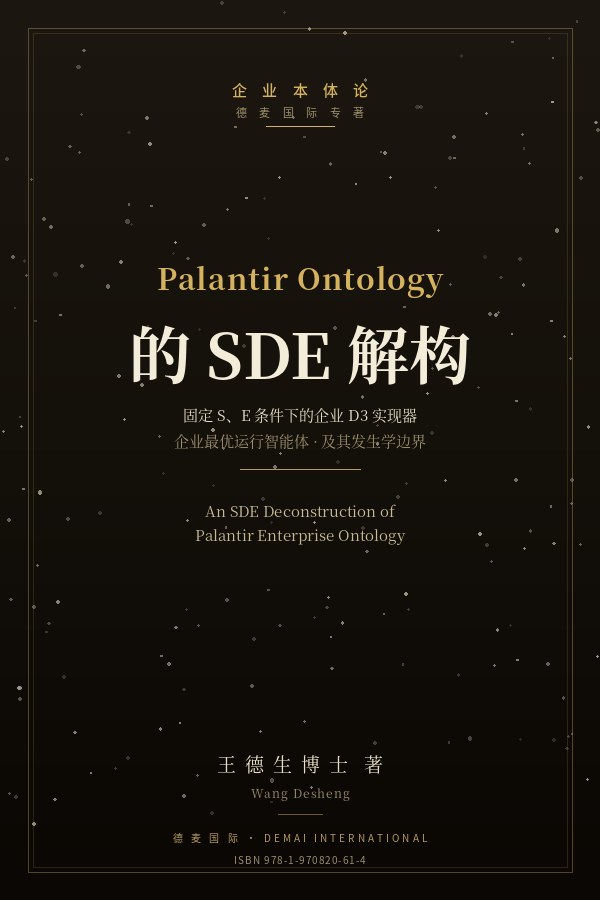
把产业观察推到学术纵深:一部二十万字专著,系统解构 Palantir,并勘探企业发生态智能的边界。
From field observation to scholarly depth: a 200,000-character monograph.
开篇立起地基之后,六论各钻一个具体的追问。陆续发表。
Once the bedrock stands, six treatises each drill one concrete question. Released on a rolling basis.
创始:一家公司是从哪一刻「发生」的
Founding: the moment a firm begins
不是注册那天,也不是拿到第一笔钱那天。一家企业真正诞生于「一群人第一次为同一个意义放弃各自的退路」那一刻——在此之前只是若干人,在此之后才是一个组织。
Not the day of registration, nor the first cheque. A firm is truly born the moment a group first gives up their separate exits for one shared meaning.
读全文 →Read → 论二 · 增长II · GROWTH规模:为什么长大常常等于变笨
Scale: why growth so often means getting dumber
每加一层管理,意义就在传递中被稀释一次。增长的真正代价不是成本上升,而是「为什么做这件事」在从上到下的每一次转述中漏气——直到基层只剩动作,没有意义。
Every layer added dilutes meaning in transmission. Growth's true cost is the leak of "why we do this" at each retelling — until the front line is left with motion and no meaning.
读全文 →Read → 论三 · 治理III · GOVERNANCE制度:越治理越失控的那道回路
Rules: the loop where more control means less
每一次「加个流程堵住漏洞」,都同时制造了新的可钻空子的接缝。制度不是意义的替代品;当一家公司开始用制度代替意义,它就进入了自我加厚的失控循环。
Every "add a process to plug the gap" creates a new seam to game. Rules are no substitute for meaning; when a firm starts replacing meaning with rules, it enters a self-thickening loop of losing control.
读全文 →Read → 论四 · 人IV · PEOPLE激励:钱买得到动作,买不到意义
Incentives: money buys motion, not meaning
纯靠激励维系的组织,员工只在被计量的地方使劲。真正让一个人愿意在没人看见时也做对的,从来不是奖金结构,而是他是否在这份工作里,接通了一个属于他自己的意义。
An organisation held together by incentives alone has people pushing only where they are measured. What makes someone do right when unseen is never the bonus structure but whether the work connects to a meaning of their own.
读全文 →Read → 论五 · 危机V · CRISIS转型:企业为什么死于自己的成功
Turning: why firms die of their own success
让一家公司成功的那套意义,会在环境变了之后成为它的枷锁。最难的转型从不是技术或资金,而是让一个组织放弃「曾经让它赢」的那个意义,重新发生一个新的。
The very meaning that made a firm succeed becomes its shackle once the environment shifts. The hardest turn is never technical or financial but letting an organisation give up the meaning that once won, and re-generate a new one.
读全文 →Read → 论六 · 终局VI · ENDING消亡:一家企业是怎么「散」的
Dissolution: how a firm comes apart
破产只是法律终点。一家企业真正的死亡,发生在它内部再也没有人相信「我们为什么在一起」的那一刻——之后哪怕账面还活着,它也只是一具还在走流程的空壳。
Bankruptcy is only the legal end. A firm's true death is the moment no one inside still believes "why we are together" — after which, even if the books survive, it is a shell still running procedures.
读全文 →Read →企业本体论不是又一套管理工具。它先回答「企业是什么」,管理方法才有地基可站。看不清一家公司到底靠什么活着,任何优化都是在给一个方向不明的东西加速。
Enterprise ontology is not another management toolkit. It answers "what a firm is" first, so that methods have bedrock to stand on. Without seeing what actually keeps a company alive, every optimisation merely accelerates something whose direction is unclear.